Our Blog
#ThrowbackThursday – Low Road
Nov
This #ThrowbackThursday we are remembering some work that we completed in Dovercourt.
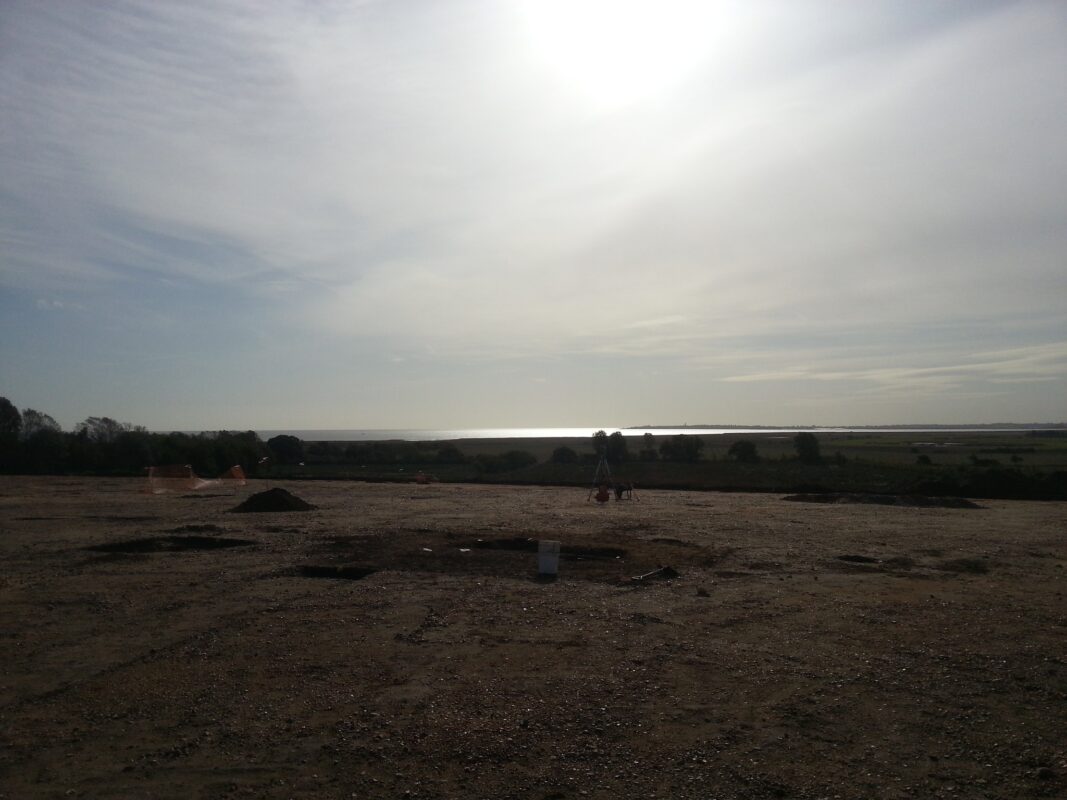
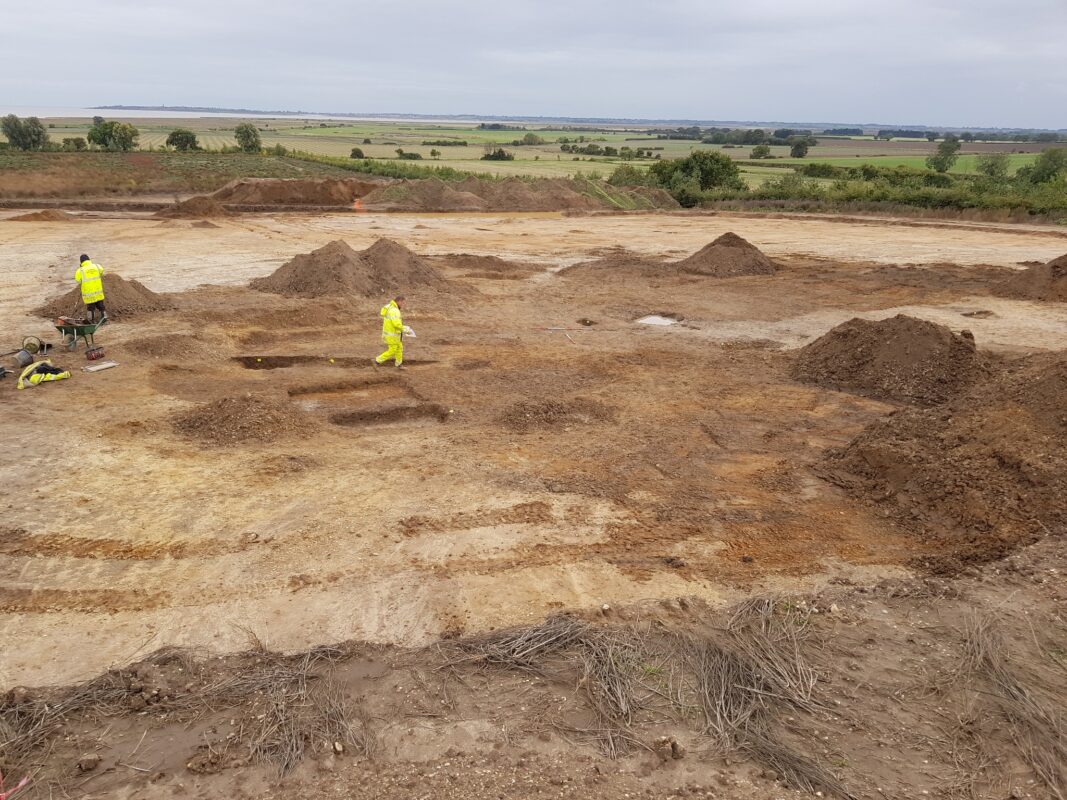
In 2019, CAT completed an excavation on Low Road in Dovercourt in advance of the redevelopment of the site. We knew this would likely be an interesting site as a number of features were identified first through cropmarks and then through an evaluation phase. These included a ring-ditch, square enclosure and numerous ditches/gullies and pits of prehistoric and Romano-British date.
The earliest finds revealed by this excavation were worked flints dating to the Mesolithic and Neolithic periods. Features from this period included a Neolithic pit/tree-throw and Late Neolithic pit, as well as prehistoric ditches. Additionally a cremation burial in the fill of a ring-ditch and an unurned cremation from the Middle Bronze Age were identified
However, the majority of findings from this excavation were from the Romano-British period. This included a co-axial field system and large rectangular enclosure laid out on high ground. We also found three corn dryers with associated environmental evidence, fragments of millstones and quernstones, which evidences cereal processing on the site. Finds evidence shows the site was in use from the 2nd into the 4th century
For more information, please see CAT Report 1509 at http://cat.essex.ac.uk/
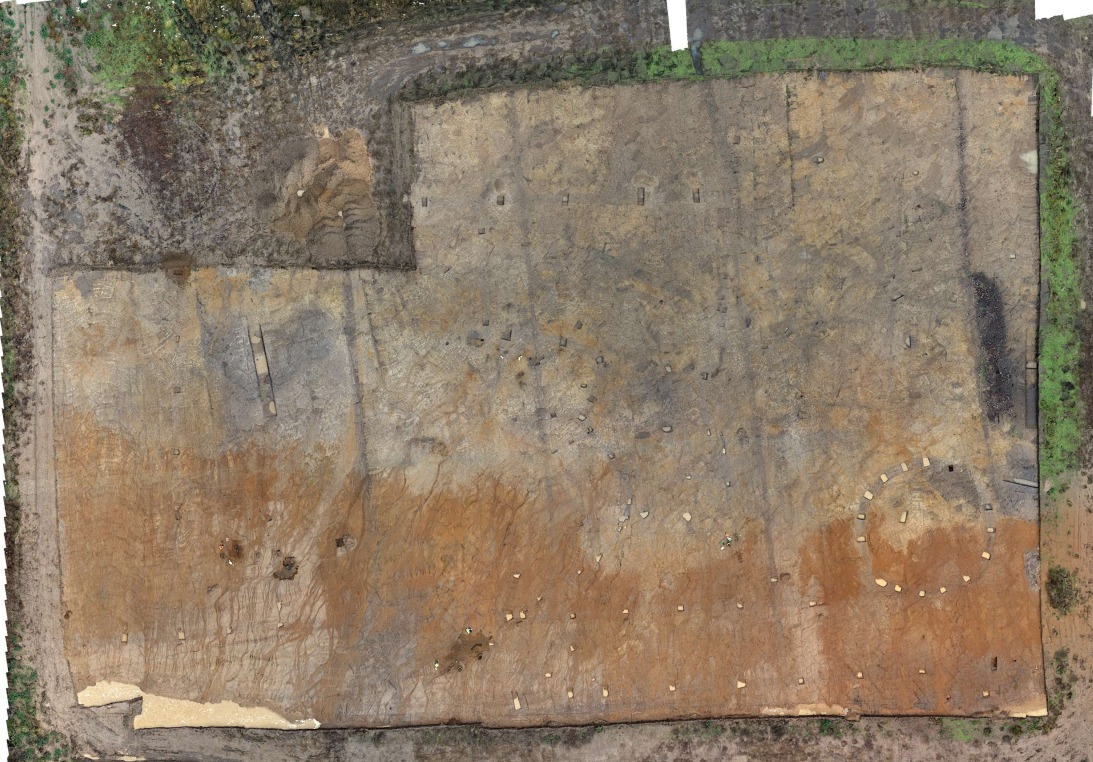
Aerial photograph of excavation Area A towards the end of the archaeological excavation. Features of note are the Middle Bronze Age barrow (bottom right-hand corner), the
Romano-British ditches (across the excavation area but largely defined by the sections cut through them) and working hollow (top left-hand corner), and the modern field boundaries crossing
the site. North is at the top of the page.
CAT would like to thank Tim Dennis for producing the image