Our Blog
The Lead Coffin
May
What is it?
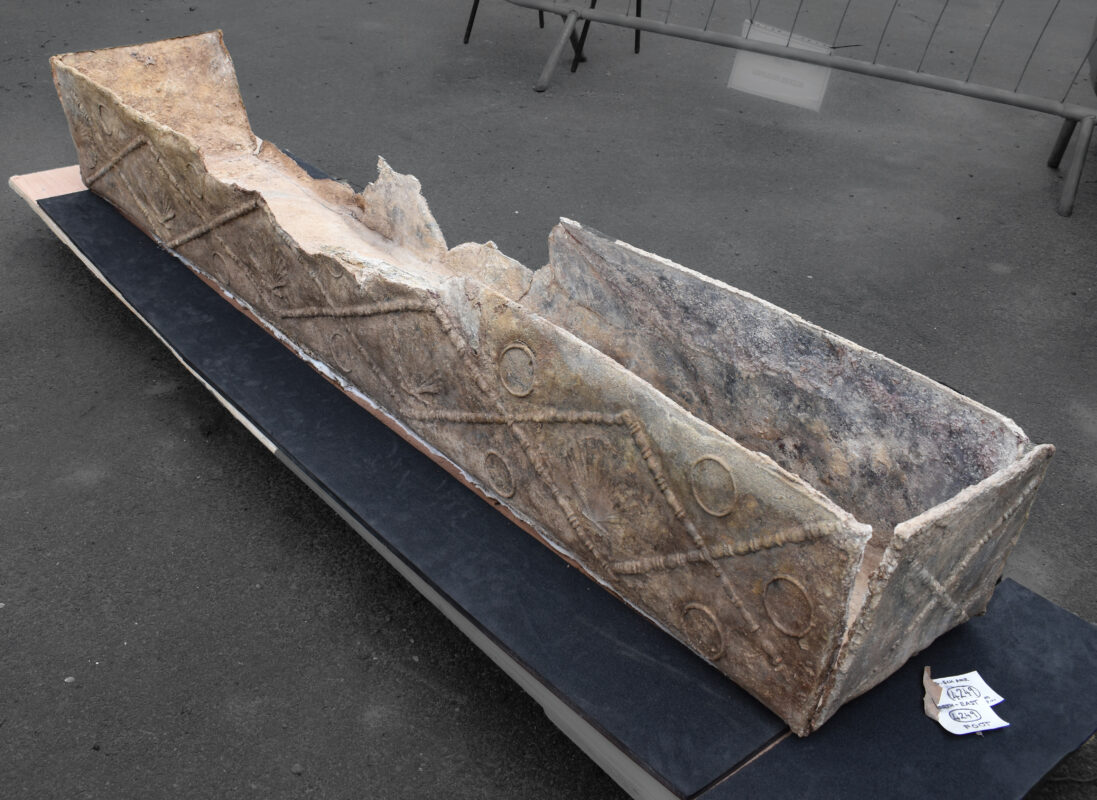
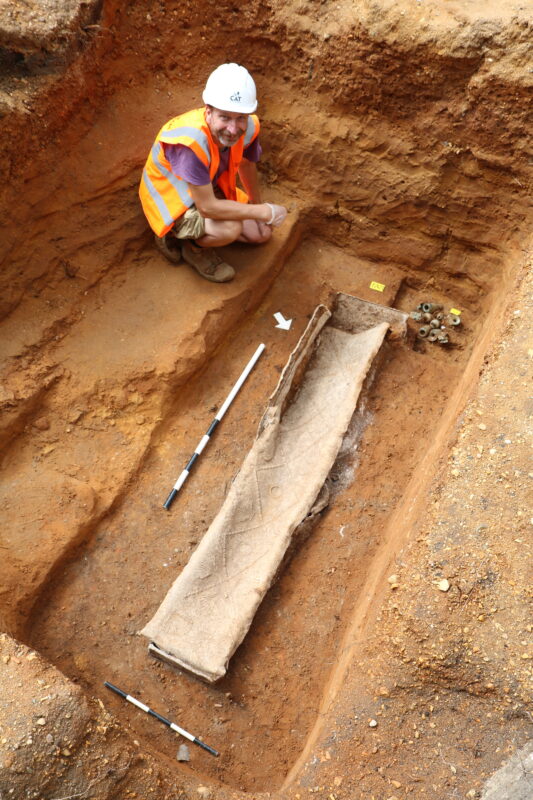
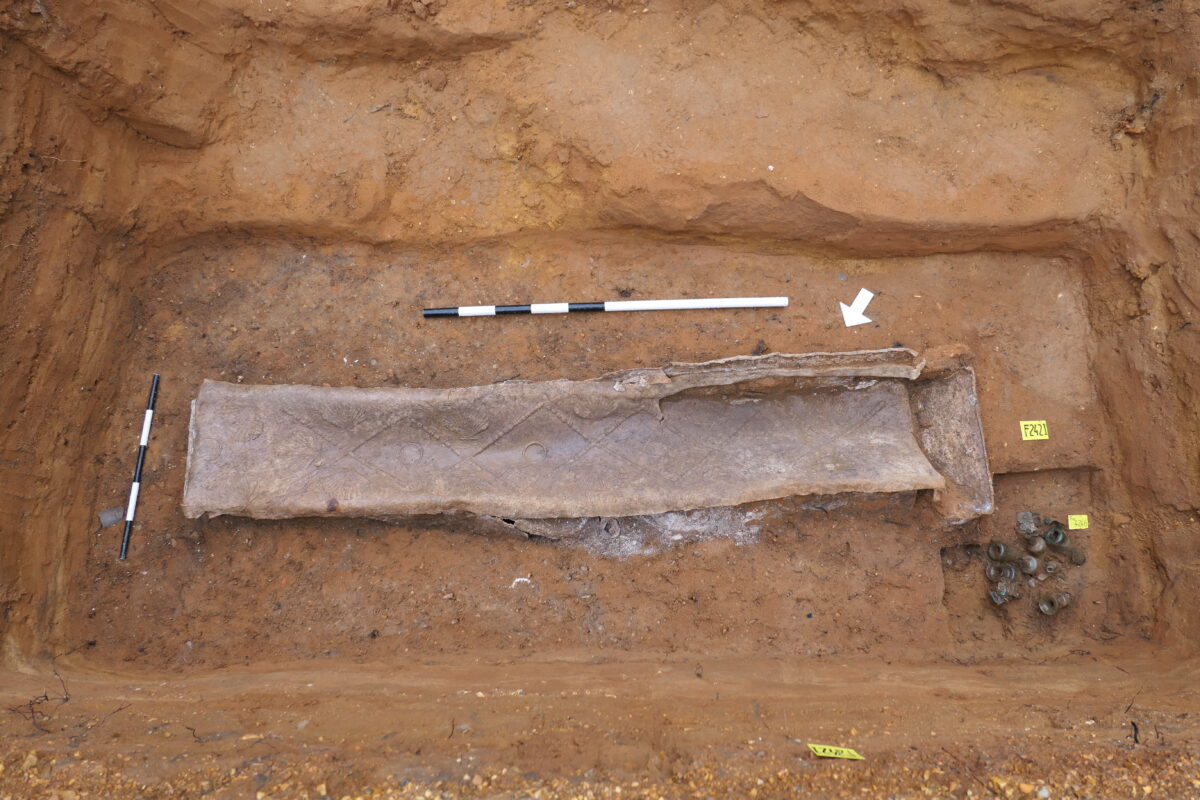
Lead coffins were used in the Roman period to hold the body of the deceased in an inhumation burial. Evidence of soil staining around this particular lead coffin indicates that it would have originally been encased in a wooden outer coffin. Iron nails from the wooden coffin were all that had survived. Both the lid and base of the coffin are decorated with a bead and double reel linear motif arranged in a diamond pattern, together with scallop shells and circles.
The deceased would have been placed in the lead coffin, scattered with gypsum to help preserve the body and sweet-smelling perfumes, and lowered into the ground. This coffin would have been extremely heavy, especially with the additional weight of the wooden outer coffin and the body. The average adult lead coffin would have weighed as much as two adult men and would have been very difficult to transfer into the grave.
What was it made of?
The lead ore or galena from which the coffins were made would have come from mines in the limestone rich regions of Britain, including the Mendips, Derbyshire, Durham, North Wales and Northumberland. The lead for this coffin is likely to have originated from open cast mines in Charterhouse-on-Mendip in Somerset, near to Wells. Roman miners were called metallici or metallarii with some of the workers who specialised in the treatment of ores were called scaurarii. Most of these workers would have been slaves, but soldiers or convicts may have been used too. The ore would have been extracted using a short, handled iron hammer, called a malleus, which would have weighed between 4 and 8 pounds. The ore was transported in bags or baskets made of leather.
The ore would have been washed, crushed and then melted. A fire from dry wood or charcoal would have been created in a simple furnace and left to burn until the walls of the furnace were very hot. Small pieces of galena would have been sprinkled on top of the fire and roasted. When the fire had burnt out, metallic lead and slag would have remained in the ashes. Silver may have also been extracted from the galena by the process of cupellation. Finally, the molten lead would have been ladled out and poured into long trough shaped clay moulds to create lead ingots also known as ‘pigs’, the bottom of which were usually impressed with an inscribed die to display the emperor’s or mine owner’s name.
Each pig of lead would have the form of an elongated and flat-topped pyramid and would have weighed around 75kg. The earliest inscribed pigs of lead from the Mendips date to AD 49, very shortly after the invasion of Britain. The lead pigs would either have been transported cross-country to Colchester by road, or by sea from the port of Uphill, near Bristol, or via the port of Clausentum, near Southampton.
How was it made?
Lead coffins were made by open sand casting to create two large sheets of lead, a larger one for the coffin base and a smaller one for the lid. First, a large wooden frame was constructed into which fine damp sand was poured and compacted down to create a firm surface. The diamond pattern on the lid of this coffin was created by impressing wooden formers, which were decorated with a double bead and reel pattern, into the damp sand, leaving a three-dimensional impression. Shell motifs were created using real scallop shells which were pressed into the sand in the centre of each diamond pattern. Circle motifs would have been created by pressing either a glass or pottery vessel or a bracelet into the sand. Once removed, the impression of a neat circle would have been left.
The base of the coffin was decorated in the same way. The scallop shell motifs are thought to relate to the soul’s last journey across the ocean to the Blessed Isles. The circles may have been representations of the sun or the moon.

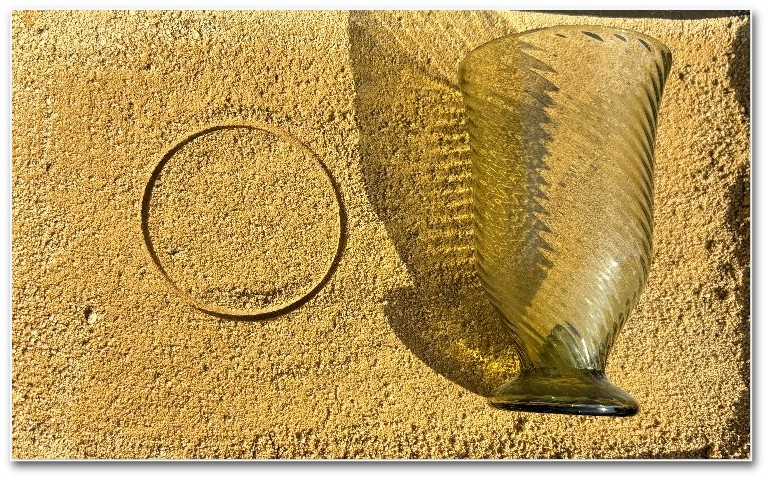
Lead from two pigs would have been melted to around 327o centigrade in large crucibles before being poured into the prepared mould. The molten lead would have filled the three-dimensional impressions in the sand and spread out to form a large rectangle of molten lead. Once cooled, the lead panel would have been removed from the mould and the sand brushed off. Squares of lead were removed from each of the four corners of the rectangular panel. The sides and ends of the panel would then have been bent up into the perpendicular and often soldered together to create a lead box. The lid would have been created from a second smaller sheet of lead with the corners of the sheet also removed and bent over to create a lid which could overlap the base.
Is it similar or different from others of its general type?
Lead coffins were a very rare form of burial practice in Roman Britain, accounting for only about 2% of the inhumation burials found so far. Only around 400 lead coffins have been discovered in Britain and many of them were sold for scrap or recycled in the 19th and early 20th centuries. They have been found from across the province, with concentrations found in the cemeteries of urban centres such as Colchester, London, York and Gloucester. Some lead coffins have also been found in rural locations such as near Roman villas. Roman laws at the time dictated that burial was not allowed inside the city walls to prevent pollution and so all the cemeteries were found alongside the roads entering and leaving the towns.
Decorated lead coffins are generally limited to the southeast of England, with concentrations in Colchester, London and Kent. Other motifs found on decorated coffins include heads of Minerva, Bacchic figures, vases and rosettes. Plain lead coffins have been excavated further to the southwest and north of England and also in South Wales. Lead coffins have also been found from across the Roman Empire, with concentrations found in Israel, Palestine, Spain, Germany and Gaul.
Why was it made or what was it used for, how was it used?
Lead coffins were made for the burial of high-status individuals. The nest of coffins, together with the use of gypsum and perfumes, would have not only been used to contain the deceased, but also to preserve and protect their body and enable their safe passage into the afterlife. This form of burial practice was used for both men and women and also for children and infants.
We know from stable isotope analysis of the skeletal remains, that some individuals originated in Roman and elsewhere in the Roman Empire, but some were local individuals. There is no evidence that these burials were reserved for military individuals or veterans. This form of burial practice seems to have been used both for pagan and Christian burials, especially at cemeteries such as Poundbury in Dorset. The orientation of this particular lead coffin burial and its associated grave goods indicates that this was probably the burial of a pagan Roman woman.
Who made it? Who for? When was it made and for how long was it in use?
Lead coffins would have been made by specialist craftsmen called plumbarii, from which our modern term plumber comes from. The craftsmen would have worked in regional workshops to create the lead coffins. They would also have made other objects from lead including pipes, tanks, lead shot and loom weights.
During the early Roman period in Britain, cremation was the most common form of burial practice. From the late 2nd century, inhumation became more popular and the lead coffin burials date from this period to the end of the Roman period in the early 5th century.
Where was it made?
Lead coffins would have been made in local workshops near to where they were used. Comparisons of the decorations from different coffins indicate that there was at least one workshop in Colchester which made them. There would also have been coffin workshops in other urban towns including London and York.

CAT would like to thank Andrea Mobbs for writing this blog post.
Andrea is an archaeology PhD student at the University of Reading researching Romano-British lead coffins.
The exhibition has been supported by Fisher Jones Greenwood, Exclusive Corporate Partner for the exhibition.
